Source Parking Brake Relay Valve for Trucks, Trailers, Buses
Find 30 verified listings for the parking brake relay valve suitable for heavy-duty trucks, commercial trailers, and city buses. Buyers can compare specifications like pressure ratings, temperature ranges, and certifications to select the right component for their fleet needs.
Key considerations
Products List


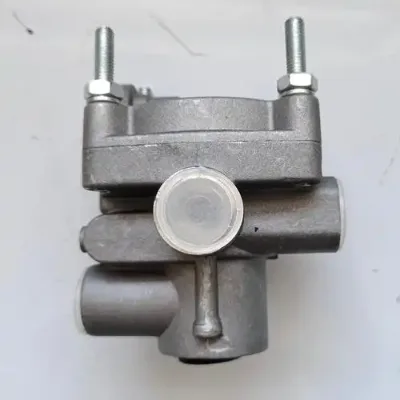


Comprehensive Sourcing Guide
Strategic Sourcing Guide for Parking Brake Relay Valves
Understanding the Technical Architecture and Core Specifications
When initiating a procurement strategy for a parking brake relay valve, the primary objective is to identify components that integrate seamlessly with existing air suspension and braking architectures. The market for these critical safety components is defined by specific operational parameters that dictate compatibility. Based on current industry observations, a high-performance relay valve for heavy-duty applications typically operates within a maximum pressure range of 13 Bar. This pressure ceiling is a critical threshold; valves exceeding or falling significantly below this limit may fail to engage the parking brake mechanism effectively under standard load conditions.
The operational temperature envelope is equally vital for reliability in diverse climates. Sourcing documents indicate that robust units are engineered to function within a temperature range of -40°C to +80°C. This wide span ensures that the valve remains responsive during extreme cold starts in Northern Europe or Eastern Asia, as well as during high-heat operations in Southeast Asia or Africa. The internal mechanics must withstand these fluctuations without seizing or leaking, a requirement that often points to the use of specific materials. Aluminum is frequently cited as the primary material for the housing in heavy-duty grades, offering a balance of corrosion resistance and weight reduction compared to steel alternatives.
Furthermore, the physical configuration of the valve must align with the vehicle's specific braking system topology. The product attributes observed suggest a classification as a "Brake System" component, specifically designed for rear positions in many configurations. The valve's model numbers, such as those associated with SAS-Brake Valve or SAS-MABCC-B/C series, indicate specialized designs intended for integration with air suspension systems. Buyers must verify that the valve supports the specific "Self-dumping" functionality required by their fleet, ensuring that air is released correctly when the parking brake is disengaged. The tread width of the associated trailer systems, often observed around 2240mm, implies that the braking force distribution must be calibrated to handle wide-body loads, necessitating a valve with precise pressure modulation capabilities, often adjustable between 1 and 4 bar for fine-tuning.
Compliance, Certification, and Regulatory Standards
In the B2B procurement of safety-critical automotive components, compliance is not merely a formality but a prerequisite for market access and operational legality. The parking brake relay valve must adhere to rigorous certification standards that vary by region. A primary certification observed in the market is ECE (Economic Commission for Europe), which is essential for vehicles operating within European markets and many other jurisdictions that align with UN regulations. Without ECE certification, a valve may be deemed non-compliant for use on public roads in Western Europe, Northern Europe, or Eastern Europe.
Additionally, the manufacturing process and quality management systems often require ISO/TS (Technical Specification) classification. This standard, frequently referenced in the context of brake drums and valve systems, ensures that the supplier maintains a consistent quality control framework. The specific classification "ISO/TSClassification:Disc" or "ISO/TSDrum Brakes Classification:Brake Drum" highlights the need for component-specific validation. Buyers should verify that the supplier holds valid ISO certifications that cover the specific manufacturing of brake valves, as this often correlates with the "Reliability: Original" attribute found in high-quality listings.
Emission standards, while more commonly associated with engines, also influence the broader vehicle system design. The availability of "Emission Standard: Available" in product specifications suggests that the valve's design does not introduce unnecessary backpressure or leakage that could affect overall vehicle efficiency. Furthermore, tire certification (ISO) and general product standards (such as prod_standard: 350 or 42x42x26 dimensions) serve as proxies for the overall quality of the supply chain. Buyers must demand documentation proving that the valve meets these specific standards before finalizing any order, particularly when sourcing from regions like Poland or Shandong, China, where manufacturing practices can vary.
Cost Drivers and Pricing Dynamics
The pricing of parking brake relay valves is influenced by a complex interplay of factors, including material costs, certification overheads, and supply chain logistics. The observed price range in the market spans from 1 to 9999 USD, a vast spectrum that reflects the difference between generic aftermarket parts and specialized, original equipment manufacturer (OEM) equivalents. The "Grade: Heavy Duty" designation is a significant cost driver; valves built to handle the 8T load capacity and 9000-10000mm wheelbase requirements of large semi-trailers command a premium over standard light-duty units.
Material composition plays a direct role in pricing. The use of aluminum, as opposed to cast iron or lower-grade alloys, increases the unit cost but offers superior longevity and weight savings. The "Customization: Available" attribute also impacts the final price. Buyers seeking valves with specific model numbers, such as 9617231630 or 41025604, may incur additional costs for tooling or specific engineering adjustments. Furthermore, the "Warranty: 12 Months" term adds value to the purchase price, effectively acting as an insurance policy against early failure.
Packaging and logistics are secondary but notable cost factors. Products listed with "Box" or "Carton Box" packing, with dimensions like 42x42x26, suggest standardized shipping units that optimize freight costs. However, the "Net Weight" of the unit, ranging from 3kg to 4kg, affects shipping fees, particularly for air freight. Buyers should be aware that the "Selling Units: Single item" listing often implies a higher per-unit cost compared to bulk orders, although the "MOQ range: 1-100" allows for flexibility. The "Main Market" diversity, covering regions from South America to Oceania, suggests that global demand fluctuations and currency exchange rates can also influence the final landed cost.
Typical Applications and Operational Environments
Parking brake relay valves are integral to the safety systems of heavy-duty transport vehicles, particularly those utilizing air suspension. The "Type: Full Trailer" and "Shape: Flatbed" attributes indicate that these valves are predominantly used in semi-trailer configurations. The "Wheel Base: 9000-10000mm" specification points to long-haul applications where the distance between axles requires robust braking force distribution to prevent jackknifing or loss of control.
The "Position: Rear" designation confirms that these valves are typically installed in the rear braking circuits of trailers, managing the engagement of the parking brakes on the rear axles. This is critical for heavy loads, where the "Load Capacity: 8T" or "Standard Weight" must be securely held during stops. The "Self-dumping" feature is particularly relevant for flatbed trailers used in construction or logistics, where the ability to quickly release and re-engage brakes is necessary for loading and unloading operations.
Geographically, the "Main Market" data reveals a global footprint. These valves are essential for fleets operating in "South America," "North America," "Eastern Europe," and "Africa," where road conditions and load requirements vary significantly. The "Temperature Range: -40°C ~ +80°C" ensures suitability for the harsh winters of "Northern Europe" and the hot climates of "Central America" or "Southern Asia." The "Condition: New" and "Reliability: Original" attributes suggest that these components are designed for primary installation in new vehicles or for high-reliability replacements in existing fleets, rather than for low-cost, short-term fixes.
Supplier Evaluation and Origin Verification
Evaluating a supplier for parking brake relay valves requires a meticulous examination of their origin and manufacturing capabilities. The "Place of Origin" data indicates a split between European manufacturing, specifically "Poland," and Asian manufacturing hubs like "Shandong, China." Each origin offers distinct advantages. Polish manufacturers often align closely with ECE standards and may offer higher perceived reliability for European markets. Conversely, Chinese suppliers may provide competitive pricing and customization options, though verification of their ISO/TS compliance is paramount.
Buyers must scrutinize the "Manufacturer" attribute, which notes "From Europe" in some contexts, to ensure the claimed origin matches the actual production facility. The "prod_model" numbers, such as 9760000160 or 9710023000, serve as unique identifiers that can be cross-referenced with the supplier's catalog to confirm authenticity. A reputable supplier should be able to provide traceability for these model numbers, linking them to specific production batches.
The "Certification" status is a critical filter. Suppliers claiming "ECE" or "ISO" certifications must provide valid certificates upon request. The presence of "Drum Brakes Classification: Brake Drum" in the certification data suggests a specialization in drum brake systems, which is relevant for many heavy-duty trailers. Buyers should also consider the "Warranty" terms; a 12-month warranty indicates confidence in product quality, whereas a lack of warranty may signal a higher risk of failure. Finally, the "Customization: Available" status should be verified to ensure the supplier can meet specific engineering requirements without compromising the "Reliability: Original" standard.
Quality Control and Long-Term Procurement Strategy
Ensuring the long-term viability of a parking brake relay valve supply chain requires a robust quality control (QC) framework. The "Net Weight" variance between 3kg and 4kg suggests that buyers should implement incoming inspection protocols to verify that each unit falls within the acceptable tolerance range. Deviations in weight can indicate material defects or incomplete assembly, which could lead to premature failure.
The "Temperature Range" and "Max. Pressure" specifications must be validated through third-party testing or supplier-provided test reports. While specific test results are not provided in the general data, buyers should request evidence that the valves have been tested for pressure retention at 13 Bar and thermal stability at -40°C and +80°C. The "Standard: 350" or "Standard: 42x42x26" dimensions should be measured to ensure compatibility with existing mounting points and air lines.
For long-term procurement, buyers should prioritize suppliers who offer "Customization" and maintain a consistent "Condition: New" inventory. The "Selling Units: Single item" option is useful for initial testing, but establishing a contract for bulk orders within the "MOQ range: 1-100" can reduce per-unit costs. The "Main Market" diversity suggests that a supplier with a global presence may offer better support and spare parts availability. Finally, the "Emission Standard: Available" and "Engine Capacity: Available" attributes, while seemingly peripheral, indicate a supplier's attention to the broader vehicle system integration, which is crucial for maintaining overall fleet efficiency and compliance. By adhering to these rigorous evaluation criteria, buyers can secure a reliable supply of parking brake relay valves that meet the demanding requirements of modern heavy-duty transport.
FAQs
What certifications are required for parking brake relay valves?
Required certifications include ECE and ISO/TS classifications for brake drums. These standards ensure compliance for European and global markets, validating the component's safety and reliability for heavy-duty applications.
How does temperature affect valve performance in different climates?
The valve operates reliably within a temperature range of -40°C to +80°C. This wide span ensures functionality during extreme cold starts in Northern Europe and high-heat operations in Southeast Asia or Africa.
Which material is used for heavy-duty parking brake relay valves?
Aluminum is the primary material used for the housing in heavy-duty grades. This choice offers a balance of corrosion resistance and weight reduction compared to steel alternatives for long-haul trailer applications.
Can the pressure be adjusted for specific braking requirements?
Yes, the pressure is adjustable between 1 and 4 bar for fine-tuning. This capability allows precise modulation to handle specific load capacities and wheelbase configurations found in full trailer systems.
What is the maximum operating pressure for these relay valves?
The maximum operating pressure is 13 Bar, which is a critical threshold for effective parking brake engagement. Valves meeting this limit ensure the mechanism functions correctly under standard heavy load conditions.
Where are these valves typically manufactured and sourced from?
Products originate from Poland and Shandong, China, offering distinct manufacturing advantages. Polish units often align with ECE standards, while Chinese suppliers provide competitive pricing and customization options for global markets.
What warranty terms are available for these brake system components?
A standard warranty of 12 Months is typically provided for these new condition units. This term acts as an insurance policy against early failure, reflecting confidence in the product's reliability and original quality.